

Published: August 28, 2026 | Last updated: August 28, 2026 Reported and fact-checked by the GrowSphereX Media editorial team from wire coverage, government statements and official documents.
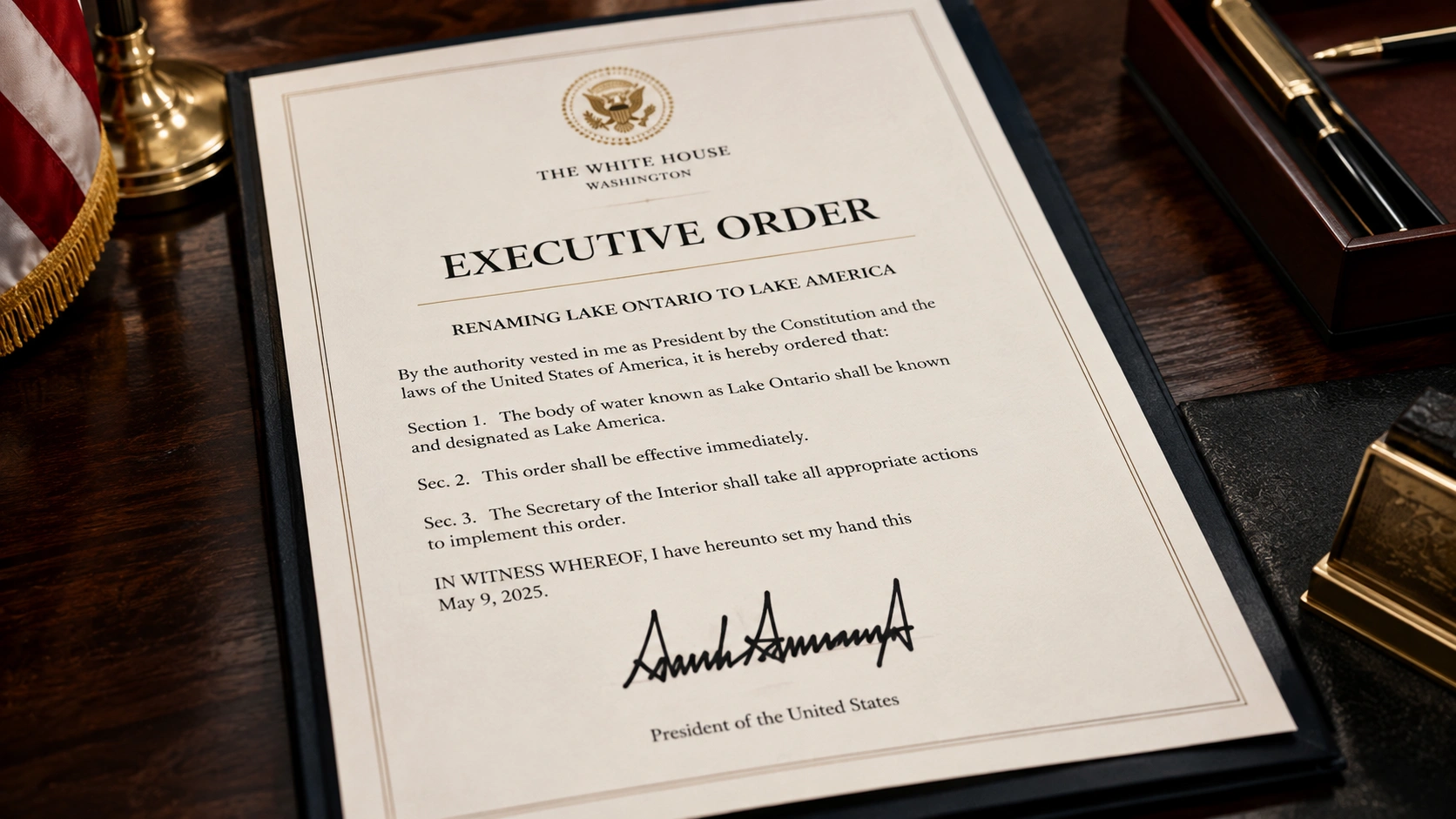
On August 27, U.S. President Donald Trump signed an executive order directing the American federal government to stop calling it Lake Ontario and start calling it Lake America. Canada said no. Within minutes, the Prime Minister, the Premier of Ontario and the Premier of Manitoba had all publicly refused the change.
If you’re trying to work out whether this actually affects you, here’s the honest version: the lake’s name isn’t the story. The tariffs are. The renaming landed in the middle of the worst Canada-US trade fight in decades, five days after 50% American duties hit Canadian goods and two days after Ottawa fired back.
This page lays out what happened, what changes legally, what doesn’t, and what to watch for next.
The Timeline: How We Got Here
| Date | What happened |
|---|---|
| Aug. 21, 2026 | Trade talks collapse late Friday night |
| Aug. 22 | 50% US duties take effect at midnight on a wide range of Canadian goods |
| Aug. 25 | Canada retaliates with new duties on $20B of US products, effective Sept. 8. Trump publicly raises renaming Lake Ontario |
| Aug. 27 | Trump signs the executive order. Carney, Ford and Kinew reject it |
| Sept. 8 | Canadian counter-tariffs take effect |
What the Executive Order Actually Does
The order instructs the US Interior Secretary to complete the name change within 30 days, working with the US Board on Geographic Names to update the Geographic Names Information System. American federal departments would then use “Lake America” on maps, contracts, records and official communications, and references to Lake Ontario would be removed from the federal database.
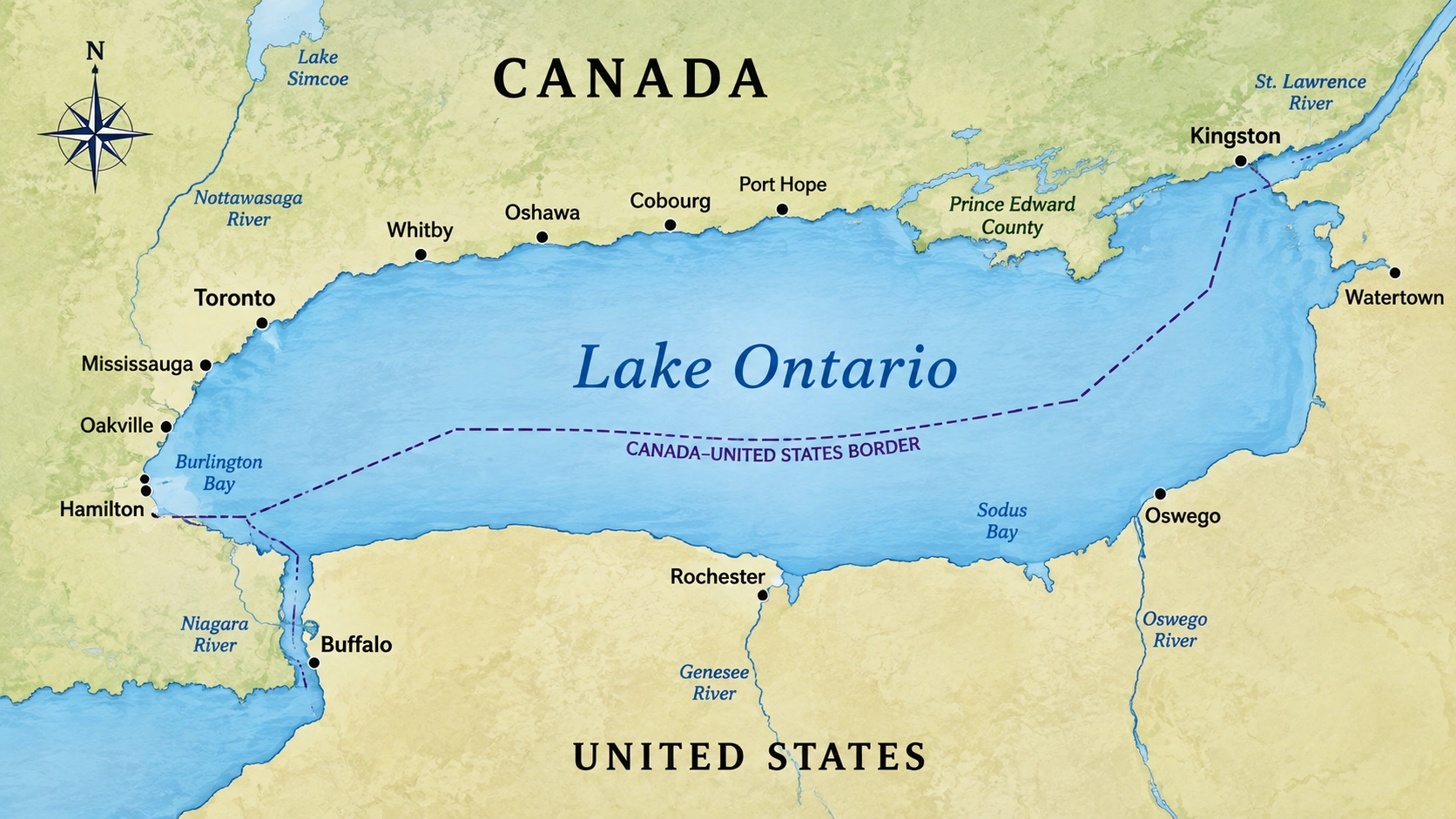
The stated justification is that because the deepest parts of the lake sit in US territory, the United States claims most of the lake’s volume, and that the lake has been central to American exploration, settlement, commerce and defence.
Trump told reporters the change took effect immediately, saying the required notifications had been made and calling it official.
Asked what message he was sending Canada, he said there was no message, then added that Canada has been ripping the US off on trade for a long time, that Canadians don’t pay for anything, and that they want to be treated like a state but aren’t one.
What It Doesn’t Do
This is the part worth being precise about, because a lot of the online reaction got it wrong in both directions.
Lake Ontario is jointly controlled by Canada and the United States under the Boundary Waters Treaty, signed in the early 20th century to manage and settle disputes over shared waters. The executive order rests on a US statute requiring uniformity in American geographic naming, which means it reaches only US federal documents and maps.
Former federal prosecutor Alyse Adamson told CNN the change will have zero impact on anyone outside US jurisdiction. CNN legal analyst Elliot Williams put it more usefully: it isn’t a renaming of the body of water, it’s a change in how the United States refers to it.
Canadian maritime lawyer Marc Isaacs made the same point to NBC News, noting that no officials in either country own naming rights to the lake. Americans can call it whatever they want. It’s Lake Ontario.
So, practically: Canadian maps, charts, provincial records and the name of the province itself are untouched. Nothing about navigation rights, water management or the treaty framework changes because of this order.
In short: for Canadians, the order changes the vocabulary on American paperwork and nothing else. The tariffs are what will actually show up in your costs.
How Canada Responded
Prime Minister Mark Carney posted shortly after the order, saying America is changing — its trading relationships, its foreign policy, its national monuments, its hydronyms — and that naming reality means calling it Lake Ontario, then, now and always.
Ontario Premier Doug Ford echoed him: it’s Lake Ontario to Canadians and to the rest of the world, now and forever.
Manitoba Premier Wab Kinew reached for a rock-band metaphor, comparing the moment to seeing an over-the-hill band in a casino playing a song from 50 years ago. He said Trump thought he had a golden oldie with renaming the Gulf of Mexico the “Gulf of America” in January 2025 and was trying to play the hits for his base again, adding that people found this one a little sad and not his best work.
Industry Minister Mélanie Joly, responding to the earlier threat, said Canadians will always call it Lake Ontario, full stop, and that the country is proud of its Great Lakes.
There was also an Indigenous objection that got less coverage than it deserved. Grand Chief Pierre Picard of the Wendat Nation condemned the decision, saying it attempts to erase Indigenous history from the landmark’s name. The name traces back more than 400 years in written records, and a Canadian government history links “Ontario” to an Iroquoian term meaning a vast body of water. Other translations render it as sparkling water or beautiful lake. The province took its name from the lake, and became a province in 1867.
The Tariff Fight Underneath It
Here’s the part that matters for anyone running a business or watching prices.
Trade talks broke down on the night of Friday, August 21. Carney suspended them, saying last-minute changes to the American proposal were unfair, uneconomic and called into question the reliability of any deal. He called the resulting 50% duties a miscalculation and said the US had wanted to destroy Canada’s major industries, naming autos, steel and aluminum. He also said American negotiators had raised French-language content discoverability on streaming platforms and French-language labelling rules as trade irritants.
The 50% duties took effect at midnight on August 22.
On August 25, Ottawa retaliated. Canada raised rates on steel products and added new duties on $20 billion worth of US goods, ranging from 15% to 50%, effective September 8. The affected product list runs to more than 800 entries, concentrated in steel, dairy, appliances, agricultural equipment, pulp and paper, and electronics. Finance Minister François-Philippe Champagne said the country stands united in fighting for Canada.
The premiers largely closed ranks. Ford promised to go at it full steam and said Carney had his full support, tariff for tariff, dollar for dollar. B.C. Premier David Eby said Canada didn’t ask for this but will keep fighting as long as it takes. Kinew said Manitoba is fully behind Carney’s direction, and made the argument that Canada should be prepared to hold out for the remaining two years of the term.
Conservative Leader Pierre Poilievre has focused on tax relief during the trade war rather than commenting directly on the counter-tariffs.
Not everyone is convinced the federal support package is enough. Business and union advocates have said the measures may not do enough for the workers and employers hit hardest.
Carney has also signalled a possible shift in approach, suggesting Canada may need to move away from matching US tariffs dollar for dollar toward more targeted retaliation aimed at protecting Canadian workers and businesses. He has been blunt about the underlying issue: an attitude at the table that treats Canada as a subsidiary of the United States is not something Canada will accept.
He has been equally blunt about the cost, acknowledging that tariffs cause economic pain on both sides of the border, including for Americans unused to rising prices, while noting Canada didn’t start this and doesn’t want to be in it.
What This Means for You
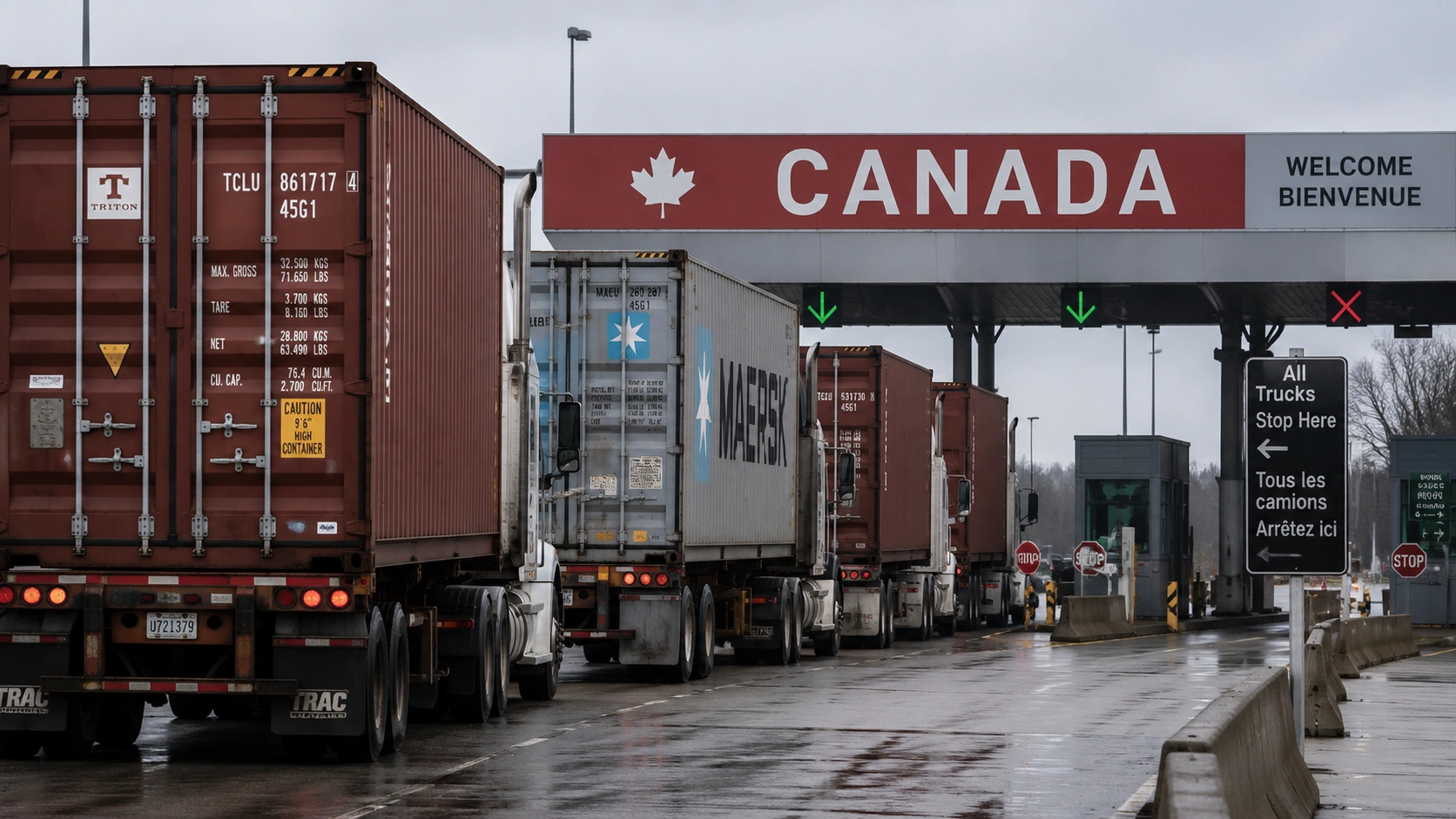
If you run a business that imports from the US: check the counter-tariff list against your input costs before September 8. Steel, appliances, agricultural equipment, pulp and paper, and electronics are the concentrated categories. Some Canadian businesses have already reported confusion about whether tariffs apply to them at all, so verify your specific product classifications rather than assuming.
If you export to the US: the 50% duties are already live as of August 22. Autos, steel and aluminum are the sectors Carney named as most exposed.
If you’re a consumer: expect the September wave to show up in the price of affected imported goods over the following weeks. Both governments have acknowledged consumer-level pain.
If you’re just trying to follow the story: watch September 8 and the 30-day Interior Department deadline on the naming order. Those are the next two concrete dates.
A Note on Reading Coverage of This
Both governments are using this fight to speak to domestic audiences, and coverage on each side of the border reflects that. Trump’s remarks have leaned on trade grievance and repeated statehood suggestions. Canadian officials have leaned on sovereignty and unity language.
If you want to judge the substance rather than the framing, the useful questions are narrow ones: which specific goods are covered, at what rate, starting when, and what is the actual legal reach of any given order. Those answers exist in published tariff schedules and the text of the orders themselves, and they don’t move with the rhetoric.
FAQs
Did Trump actually rename Lake Ontario? He signed an executive order directing the US federal government to use “Lake America” in its own documents and maps. It applies within US federal jurisdiction only. Canada, the province of Ontario and international usage are unaffected.
Can the US legally rename a lake it shares with Canada? It can change what its own government calls it. It cannot change the name for Canada or anyone else. The lake is jointly managed under the Boundary Waters Treaty, and neither country holds naming rights over the other.
What did Mark Carney say about Lake America? He said naming reality means calling it Lake Ontario — then, now and always — and pointed out that the name predates both Canada and the United States.
When do Canada’s counter-tariffs start? September 8, 2026. They cover roughly $20 billion in US goods at rates between 15% and 50%, across more than 800 product entries.
Which sectors are hit hardest? Canada’s counter-tariffs concentrate on steel, dairy, appliances, agricultural equipment, pulp and paper, and electronics. On the US side, Carney identified autos, steel and aluminum as Canada’s most exposed export industries.
Has Trump done this kind of renaming before? Yes. On his first day back in office in January 2025 he signed Executive Order 14172, renaming the Gulf of Mexico the “Gulf of America” and restoring the name Mount McKinley to the peak known as Denali.
Where does the name “Ontario” come from? It appears in written records more than 400 years ago. A Canadian government history traces it to an Iroquoian term meaning a vast body of water; other translations give sparkling water or beautiful lake. The province took its name from the lake.
This is a developing story. Details, dates and tariff schedules may change; we will update this page as official confirmations come in. Reporting draws on the Associated Press, CBC News, CTV News, NBC News, CNN, NPR and PBS NewsHour, along with statements from the Government of Canada and the White House. Nothing here is legal, tax or trade-compliance advice — verify your specific product classifications with a customs broker or the Canada Border Services Agency before making business decisions.
Sources:
- CNN: Can Trump actually change Lake Ontario to ‘Lake America’?
- NBC News: Trump orders Lake Ontario renamed ‘Lake America’
- CBC News: Ottawa’s counter-tariffs find broad support in Canada
- BNN Bloomberg / CTV: Carney challenges Trump’s order — live updates
- NBC News: Canada retaliates by raising steel duties on $20B of goods
- NPR: Canada hits back at the U.S. as the trade fight escalates